What Is a Landing Page and Why Every Business Needs One
If you've spent any time reading about digital marketing, you've almost certainly come across the term "landing page." It gets thrown around a lot—by marketers, web developers, and business coaches alike. But what actually is a landing page? How is it different from a regular website page? And why does it matter for your business?
In this post I'm going to break it all down in plain, simple language—no jargon, no fluff. By the end, you'll know exactly what a landing page is, why it's one of the most powerful tools in digital marketing, and whether your business needs one (spoiler: it does).
So what exactly is a landing page?
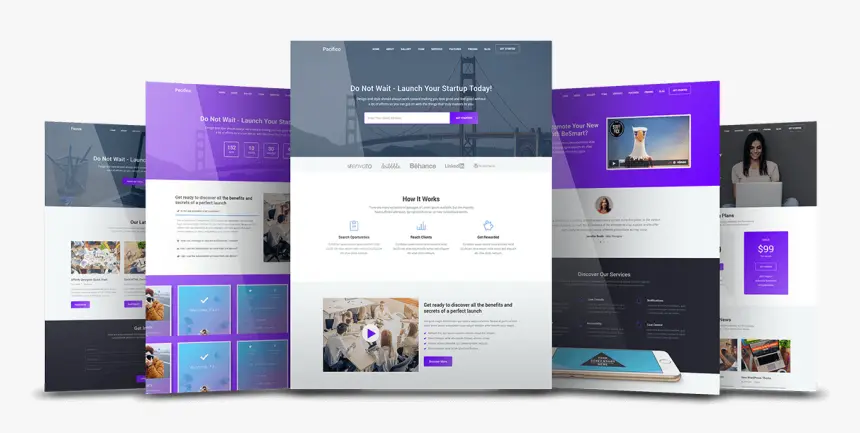
A landing page is a standalone web page built with one single purpose — to get a visitor to take one specific action.
That action might be:
- Filling out a form to request a quote
- Signing up for a free consultation
- Downloading a free guide or resource
- Buying a product
- Registering for a webinar or event
- Joining an email list
The key word here is single. Unlike your main website, which has a navigation menu, multiple pages, and lots of different things to click on, a landing page strips everything away and focuses the visitor's attention on one thing and one thing only.
No distractions. No rabbit holes. Just one clear message and one clear action.
How is it different from my homepage?
This is the most common question people ask, and it's a great one.
Your homepage is like the front door of your business. It introduces who you are, what you do, and where people can go to learn more. It serves many different visitors with many different intentions — some want to read your blog, some want to see your services, some want to find your contact details. Your homepage has to cater to all of them.
A landing page is completely different. It's built for one specific type of visitor, with one specific intention, arriving from one specific place. It has no navigation menu. It doesn't link off to other pages. It doesn't give visitors a reason to wander. It takes the visitor by the hand and walks them directly toward one action.
Think of it this way — your homepage is a reception area. A landing page is a one-on-one sales meeting.
A real-world example
Let's say you run a photography business and you're running a Facebook ad offering a free 30-minute consultation for couples looking for a wedding photographer.
If that ad takes people to your homepage, here's what happens: they land on your site, see your navigation menu, maybe click to your portfolio, then your about page, then get distracted and leave. You've lost them.
But if that same ad takes people to a dedicated landing page — one that talks specifically about wedding photography, shows your best wedding shots, includes a testimonial from a happy couple, and has one button that says "Book Your Free Consultation" — those visitors have no distractions. They read the page, they feel confident, they click the button.
Same ad. Same budget. Completely different result.
That's the power of a landing page.
Why does every business need one?
Whether you're a freelancer, a local shop, a service provider, or an online business, landing pages are one of the highest-return investments you can make in your digital marketing. Here's why:
They dramatically improve your conversion rate
A conversion rate is the percentage of visitors who take the action you want them to take. A typical website homepage might convert at 1–2%. A well-built, targeted landing page can convert at 5%, 10%, or even higher — depending on how well it's matched to its audience.
That means for the same amount of traffic, a landing page can generate 5 to 10 times more leads or sales than sending people to your regular website.
They make your advertising more effective
If you're running any kind of paid advertising — Google Ads, Facebook Ads, Instagram Ads — sending that traffic to your homepage is one of the most expensive mistakes you can make. You're paying for every click. A homepage that confuses or distracts visitors wastes that money.
A landing page that matches the exact message of your ad, speaks directly to the audience who clicked, and presents one clear action — that's how you get a real return on your ad spend.
They help you capture leads
Not everyone who visits your website is ready to buy right now. Some people are browsing. Some are comparing options. Some are just curious. If you don't capture their details while they're on your site, they'll leave and you'll never reach them again.
A landing page with a lead magnet — a free guide, a discount code, a free consultation — gives visitors a reason to share their email address with you. Now they're in your world. You can follow up, build a relationship, and convert them into a customer over time.
They let you test and improve your marketing
Because a landing page has one goal, it's very easy to measure whether it's working. You can test different headlines, different images, different button colours, and different offers — and see clearly which version gets more people to take action. This kind of testing, known as A/B testing, is how serious businesses continuously improve their marketing results.
With a regular website, this kind of testing is messy and complicated. With a landing page, it's clean and straightforward.
What makes a good landing page?
Not all landing pages are created equal. A poorly built landing page can actually hurt your results. Here's what separates a high-converting landing page from one that falls flat:
A headline that speaks to the visitor's specific problem or desire The first thing someone reads should make them think "yes, this is exactly what I'm looking for." Generic headlines like "Welcome to our website" do nothing. Specific headlines like "Get a professional website that brings in clients — starting from $999" stop people in their tracks.
A clear, benefit-focused subheading Follow your headline with a sentence that reinforces the offer and makes the benefit crystal clear. What will the visitor gain? What problem will be solved?
Focused, persuasive copy The body of the page should speak directly to the visitor's pain, present your solution, and explain why you specifically are the right choice. No waffle. No padding. Every sentence should earn its place.
Social proof Testimonials, reviews, client logos, case study results — whatever you have that proves other people have trusted you and been happy about it. Social proof is one of the most powerful conversion drivers on any landing page.
One call to action — repeated One button. One instruction. One next step. But repeated at the top, middle, and bottom of the page so there's always a visible action no matter where the visitor is on the page.
No navigation menu This is the one that surprises most people. A landing page should have no links to other pages — no top menu, no footer links, nothing that gives visitors a way to wander off. The only place to go is forward — toward the action.
Types of landing pages
There are two main types of landing pages, and knowing the difference helps you use them correctly:
Lead generation landing pages — These are designed to capture contact information. They offer something valuable in exchange for an email address or phone number. A free consultation, a downloadable guide, a discount, an exclusive webinar. The goal is to start a relationship, not to make an immediate sale.
Click-through landing pages — These are used to warm up a visitor before taking them to a checkout or sign-up page. Instead of asking for the sale immediately, the page builds desire and answers objections, then the button takes them to the next step in the process.
Most service businesses benefit most from lead generation landing pages. Most e-commerce or product businesses lean toward click-through pages — though many use both.
Do I need a whole new website or just a landing page?
This is a question I get asked regularly, and the answer depends on where you are in your business journey.
If you're just starting out and need to generate leads quickly — a single, well-built landing page can be enough to get you going. It's faster to build, cheaper than a full website, and can start working for you within days.
If you already have a website but it's not generating the enquiries you need — a dedicated landing page for your main offer or your paid ads is often the quickest win available to you. You don't need to rebuild your whole site. You just need one focused, optimised page doing a specific job.
If you're growing and serious about your online presence — you want both. A full website that builds your brand and showcases everything you do, plus landing pages for each specific campaign, offer, or audience segment.
The bottom line
A landing page is not a luxury — it's one of the most practical, high-impact tools available to any business that wants to grow online. It takes a specific visitor, with a specific need, and gives them one clear reason to take one specific action.
Whether you're running ads, promoting a service, building an email list, or launching a new offer — a landing page is the difference between traffic that converts and traffic that disappears.
If you've been sending people to your homepage and wondering why nobody gets in touch, now you know why.
Ready to see what a high-converting landing page could do for your business?
I design and build landing pages that are built around one thing: getting you more leads and enquiries. If you want to know what one would look like for your specific offer, let's have a quick conversation.
👉 Get in touch today and let's build a landing page that actually works for you.